
Categories
Atlanta Real Estate, Atlanta Neighborhoods, Atlanta Real Estate Market Update, Luxury Real EstatePublished May 6, 2026
Luxury Is No Longer One Market. It Is Five Distinct Worlds.
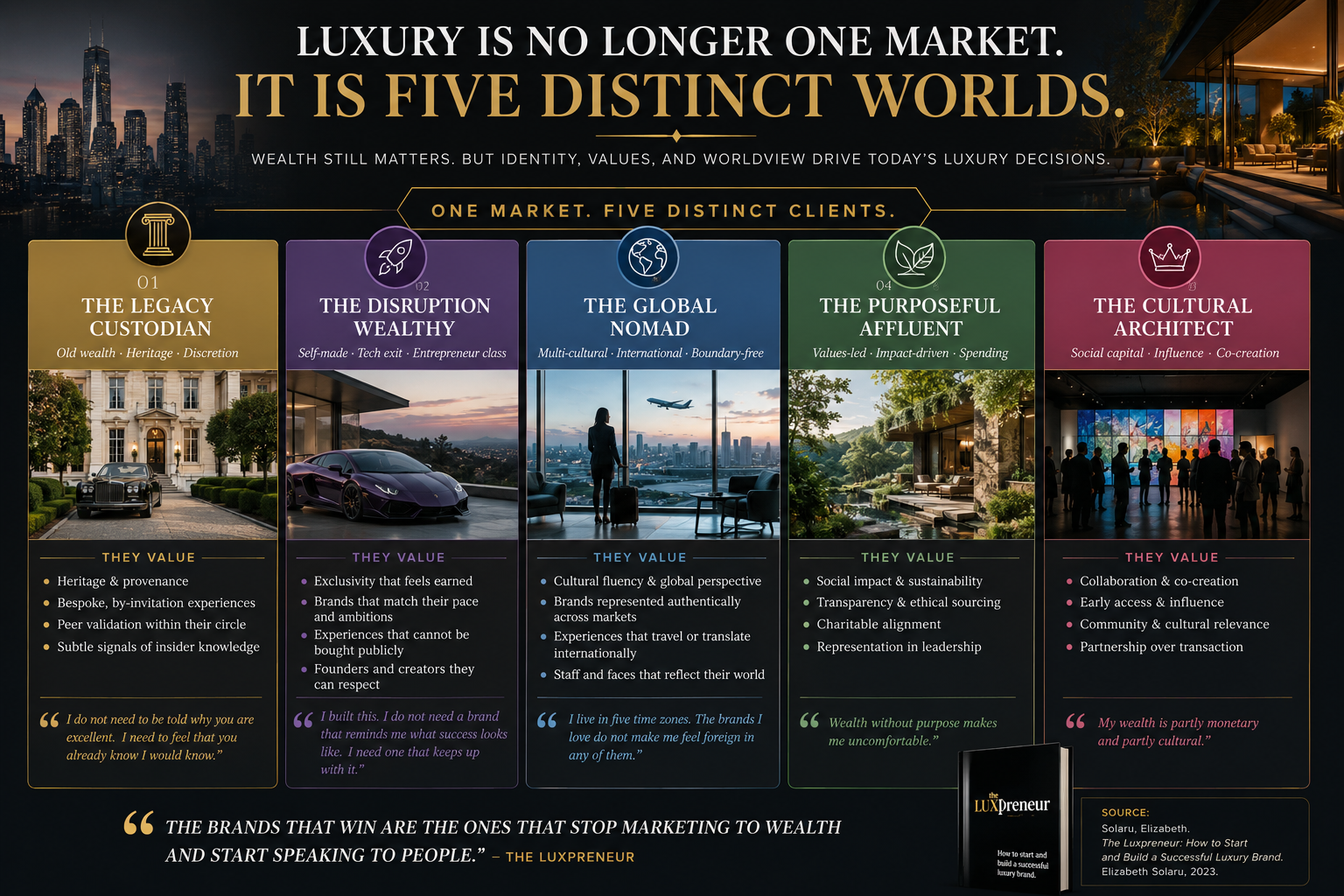
For decades, luxury brands treated affluent consumers as one category. Wealthy meant wealthy. The assumption was simple. Build prestige. Signal exclusivity. Raise prices. The right buyers would come. That map no longer works.
Today’s luxury market is fragmented into distinct psychological and cultural identities. Wealth still matters, but identity, worldview, influence, values, and life experience now shape purchasing behavior just as much as income or net worth. According to luxury strategist and author of The Luxpreneur, Elizabeth Solaru, “the monolith never existed.”
This shift matters deeply for luxury real estate professionals, developers, architects, hospitality brands, and anyone serving affluent clients. Especially in markets like Atlanta, where wealth creation is accelerating through technology, entrepreneurship, entertainment, medicine, logistics, sports, and global business migration.
The old luxury buyer profile has fractured into five distinct client segments. Each sees status differently. Each defines value differently. Each responds to different language, experiences, and signals. The luxury professionals who understand this evolution will dominate the next decade.
- The Legacy Custodian
This client represents traditional wealth. Multi generational wealth. Institutional wealth. Heritage wealth. According to the presentation summarizing The Luxpreneur, these buyers attended the “right schools,” belong to established institutions, and expect luxury to find them rather than the other way around.
They are not impressed by loud branding or excessive visibility. They value:
- Heritage
- Provenance
- Discretion
- Insider access
- Personal referrals
- Continuity
This client segment still exists strongly in legacy neighborhoods and established luxury enclaves. In real estate, they often prefer timeless architecture over trendy design. They value privacy over spectacle. Relationships matter more than advertising.
If you are marketing to this audience, sophistication matters. Quiet confidence matters. Trusted introductions matter. Mass market luxury positioning repels them.
- The Disruption Wealthy
This group represents one of the fastest growing luxury segments globally. These are entrepreneurs, tech founders, creators, investors, and self made operators. According to the document, many are under 45 and “have the money of old wealth and the mindset of a startup founder.” Their luxury behavior looks completely different.
They value:
- Speed
- Access
- Innovation
- Exclusivity that feels earned
- Founder relationships
- Experiences unavailable to the public
They do not aspire upward toward traditional luxury institutions. They expect brands to keep pace with them. Formal luxury language often feels outdated to this segment. Gatekeeping feels artificial. They want modernity, relevance, and authenticity.
In luxury real estate, this client is drawn toward smart homes, wellness integration, flexible workspaces, modern architecture, experiential design, and communities that support ambitious lifestyles.
This is one reason luxury markets in cities like Atlanta continue evolving rapidly. The new affluent class often arrives through startup exits, medical specialization, sports, entertainment, logistics, or corporate relocation. They bring a different psychology with them.
- The Global Nomad
This luxury consumer is increasingly common in international gateway cities and globally connected markets. According to the document, they “hold passports in three countries and residences in two cities.” Their worldview is borderless.
They value:
- Cultural fluency
- Global perspective
- International adaptability
- Multi market sophistication
- Authentic representation across cultures
This client notices immediately when brands operate from narrow assumptions. Luxury professionals serving this audience need global awareness. Not performative diversity. Genuine fluency. This applies heavily to luxury real estate.
Global buyers increasingly evaluate cities based on lifestyle flexibility, airport connectivity, education access, healthcare systems, tax environments, cultural vibrancy, and investment stability.
Atlanta’s international growth story positions it well here. The city continues attracting executives, entrepreneurs, athletes, medical professionals, filmmakers, and investors from across the world.
- The Purposeful Affluent
This segment reflects one of the most important shifts happening in luxury today. These consumers are wealthy, but they are uncomfortable with meaningless consumption. According to Elizabeth Solaru, “wealth without purpose makes them uncomfortable.” They want alignment between spending and values.
They care about:
- Social impact
- Sustainability
- Transparency
- Charitable alignment
- Ethical sourcing
- Representation in leadership
This does not mean they reject luxury. Far from it. They simply expect luxury brands to stand for something larger than profit. In real estate, this often translates into interest in:
- Energy efficiency
- Wellness oriented design
- Walkability
- Community impact
- Preservation
- Philanthropic engagement
- Long term sustainability
This client quickly detects performative branding. Greenwashing and superficial messaging repel them immediately. Luxury brands and real estate professionals serving this audience need substance behind the messaging.
- The Cultural Architect
This segment may hold the greatest influence of all. According to Elizabeth Solaru, their wealth is “partly monetary and partly cultural.” These individuals shape taste. They influence conversations. They create cultural momentum. They are not simply customers. They are amplifiers. This group includes creators, tastemakers, athletes, entertainers, media personalities, founders, influential community leaders, and cultural connectors.
They value:
- Collaboration
- Co-creation
- Early access
- Community
- Cultural relevance
- Partnership over transaction
Traditional marketing often fails here because these individuals expect reciprocal value. They do not want generic gifting or performative partnerships. They want authentic collaboration and meaningful engagement. In luxury real estate, this audience often seeks homes and communities that reflect identity, creativity, influence, and experience driven living.
Why This Matters for Luxury Real Estate
Luxury real estate professionals often make a critical mistake. They market luxury properties the same way to everyone. But the same home will resonate differently with each of these five segments. A Legacy Custodian may value heritage architecture and privacy. A Disruption Wealthy buyer may care about innovation, wellness technology, and experiential entertaining. A Global Nomad may focus on international accessibility and cultural positioning. A Purposeful Affluent buyer may prioritize sustainability and community impact. A Cultural Architect may care most about identity, story, design relevance, and influence. Same property. Different emotional drivers.
Elizabeth Solaru offers a powerful insight: “The brands that win are the ones that stop marketing to wealth and start speaking to people.” That principle applies directly to luxury real estate. The future belongs to advisors who understand psychology as much as price point. Professionals who understand identity as much as square footage. Experts who recognize that luxury is no longer defined by money alone. The market has already moved.
The question is whether your positioning has moved with it.
Sarah Chatel
CEO & Team Leader | Chatel Group | Keller Williams Atlanta Midtown
or another way