
Categories
Atlanta Real Estate, Real Estate Business BuildingPublished June 1, 2026
The Four Ways to Build a Real Estate Business: Which Path Are You On?

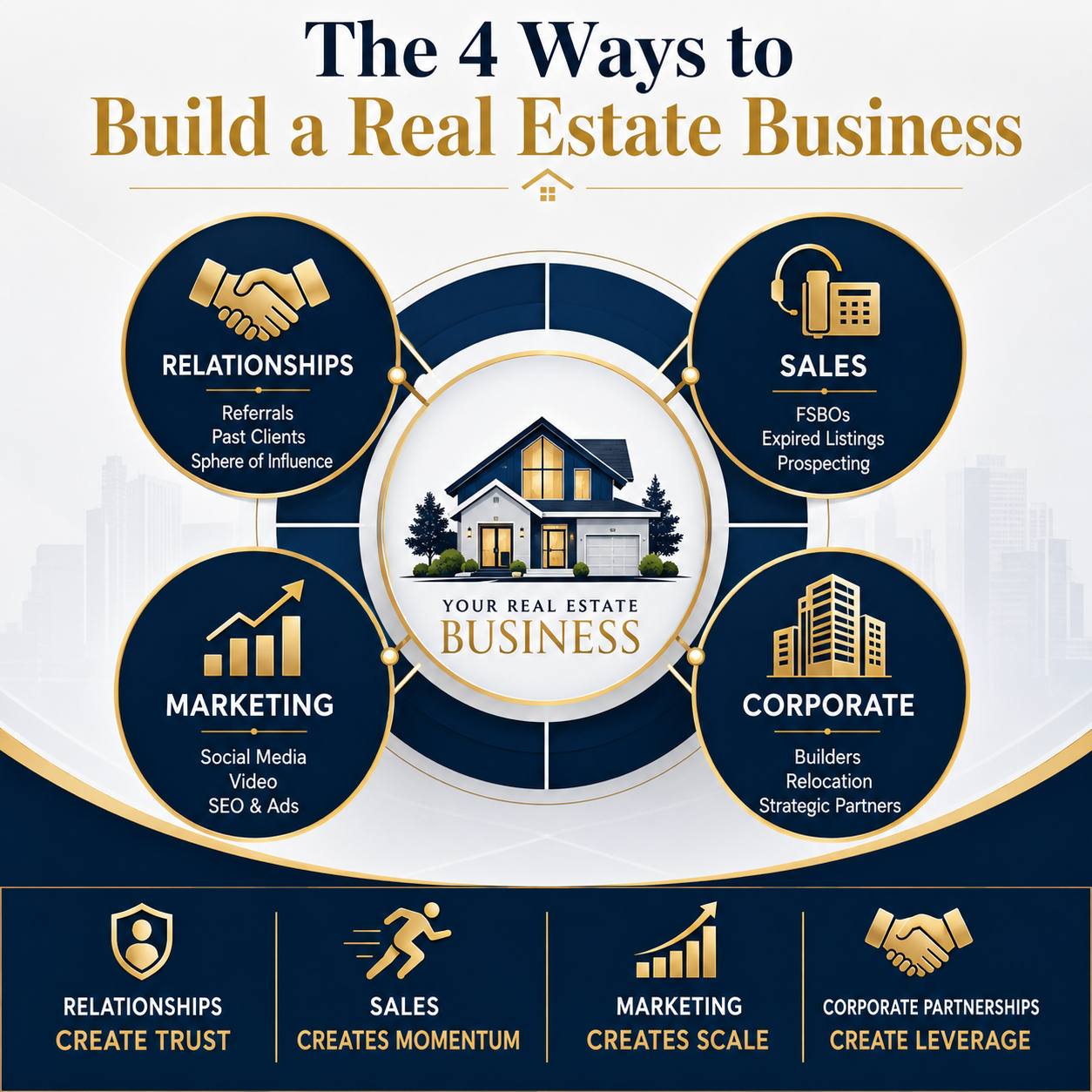
Every successful real estate business is built on lead generation. The question is not whether you generate leads. The question is how. Over the years, I have observed that nearly every agent builds their business through one of four approaches:
- Relationship Based
- Sales Based
- Marketing Based
- Corporate Based
Most agents use a combination of these methods. However, one approach usually dominates their business model. Understanding the strengths and weaknesses of each path helps you decide where to invest your time, money, and energy.
- The Relationship Approach
The relationship approach is built on one simple idea: people do business with people they know, like, and trust. This model focuses on creating valued relationships over time. Agents who succeed here invest heavily in their sphere of influence, past clients, friends, family, neighbors, community organizations, and professional networks. The process is straightforward: Build Relationships - Deliver Value - Maintain Relationships The goal is to remain relevant long before someone needs a real estate agent. Examples of relationship activities include:
- Client appreciation events
- Personal phone calls
- Handwritten notes
- Community involvement
- Social media engagement
- Educational newsletters
- Homeownership resources
The biggest advantage of the relationship model is cost efficiency. Once relationships are established, referrals often become the primary source of business. The quality of clients is usually high because trust already exists. Conversion rates tend to be stronger than almost any other lead source.
The challenge is time. Relationships require nurturing. You cannot ignore your database for six months and expect referrals to appear. Consistency matters. Many top producing agents have spent years building databases filled with people who view them as trusted advisors rather than salespeople.
The relationship approach is often the most sustainable long term strategy.
- The Sales Approach
The sales approach is built around direct prospecting. This is where agents actively seek opportunities every day rather than waiting for relationships to produce them. Typical examples include:
- FSBOs
- Expired listings
- Circle prospecting
- Geographic farming calls
- Open house follow up
- Investor outreach
This approach typically focuses on people who are not already in your database. The sales model is highly activity driven. Success often comes down to:
- Number of conversations
- Number of appointments
- Number of presentations
- Number of signed agreements
The biggest advantage is speed. A motivated agent with strong sales skills can generate opportunities quickly. New agents often use this model because they do not yet have a large database. The downside is the emotional toll. Prospecting involves rejection. Most people contacted are not interested today. Many sales based agents hear "no" far more often than "yes." The reality is that conversion rates are usually low. In many prospecting channels, fewer than 10 percent of contacts become clients.
The agents who thrive in this model embrace discipline and consistency. They focus on the process rather than individual outcomes. Sales-based businesses often create rapid growth, but many agents eventually seek ways to transition some of that business into relationship based referrals.
- The Marketing Approach
The marketing approach uses money and systems to create opportunities at scale. Rather than generating leads through personal conversations, agents generate attention through marketing. Examples include:
- Digital advertising
- Google PPC campaigns
- Facebook and Instagram ads
- YouTube content
- SEO
- Direct mail
- Email newsletters
- Video marketing
The internet has dramatically expanded the possibilities of marketing based businesses. A single piece of content can reach thousands of people. A well optimized website can attract leads while you sleep. A strong video strategy can position you as the local expert in your market. The biggest advantage is scalability. Marketing allows you to reach far more people than you could ever contact individually.
The downside is cost. Marketing is often the most expensive approach to building a business. Advertising costs continue to rise. Lead quality varies significantly. Success requires both financial investment and consistent execution. Many agents fail because they stop marketing too soon.
Marketing works best when viewed as a long term investment rather than a short term expense. The highest performing marketing businesses also combine strong follow up systems and relationship building skills. Generating a lead is only the first step. Converting that lead into a client is where the real work begins.
- The Corporate Approach
The corporate approach involves building relationships with organizations rather than individual consumers. This model focuses on becoming the preferred real estate resource for businesses and institutions. Examples include:
- Builders
- Property management companies
- Asset management firms
- REO companies
- Relocation companies
- Financial institutions
- Estate attorneys
- Corporate HR departments
In many ways, the corporate approach is a specialized version of relationship building. Instead of developing hundreds of consumer relationships, agents develop strategic partnerships with organizations that generate recurring business. The advantages are significant. One strong corporate relationship can produce dozens of transactions each year. Builders may provide a steady stream of listings. Relocation companies may generate buyer referrals. Property managers may create future seller opportunities.
The challenge is access. These relationships often take years to establish.Corporate partners expect professionalism, systems, reporting, and consistent performance.
Winning the business is difficult. Keeping the business requires excellence. Agents who succeed here often build specialized expertise that makes them indispensable to their partners.
Which Approach Is Best?
There is no single right answer The best businesses often combine all four approaches. For example:
- Relationships generate referrals.
- Sales creates immediate opportunities.
- Marketing builds visibility.
- Corporate partnerships provide scale.
The real question is where you should spend most of your energy. A new agent may rely heavily on sales prospecting. An established agent may generate most business from relationships. A team leader may invest heavily in marketing. A niche specialist may focus on corporate partnerships. The strongest businesses are diversified. If one lead source slows down, the others continue producing opportunities.
A Simple Formula for Long Term Success
If I were building a real estate business today, I would focus on this order:
- Relationships first
- Sales second
- Marketing third
- Corporate partnerships fourth
Relationships create trust. Sales creates momentum. Marketing creates scale. Corporate partnerships create leverage. When all four work together, your business becomes more predictable, more profitable, and more resilient. The goal is not simply to generate transactions.The goal is to build a business that continues producing opportunities year after year.

Sarah Chatel
CEO & Team Leader | Chatel Group | Keller Williams Atlanta Midtown
or another way